What to Do If the Sound Becomes Louder or Distorted When Playing Recorded Videos in PotPlayer
When playing a video recorded with oCam in PotPlayer, the sound may sometimes be different from the original recording or become distorted. This may be caused by PotPlayer's Normalizer setting. Below is a detailed explanation of how to disable the Normalizer setting so the original sound plays back as it was recorded.
To disable the Normalizer in PotPlayer's Preferences, follow these steps:
1. Run PotPlayer.
2. Open the Preferences window. To do this, press the F5 key on your keyboard, or right-click on the player screen and select 'Preferences' from the menu that appears.
3. When the Preferences window opens, click the 'Audio' category in the left menu, then go to the 'Normalizer/Reverb' submenu.
4. In the 'Normalizer/Reverb' settings, check whether the 'Use Normalizer During Playback' option is enabled. In most cases, this option is enabled by default.
5. Uncheck 'Use Normalizer During Playback', then click the 'OK' button to save the setting.
After applying this setting, PotPlayer will no longer automatically amplify the sound, so the original sound recorded with oCam will play back as it is.
Note: What is the Normalizer feature?
The Normalizer is a feature that amplifies the playback volume to match 0dBFS (decibels full scale). For example, if the original sound was recorded at -20dBFS, the Normalizer amplifies it closer to 0dBFS so it sounds louder. However, if the sound is amplified too much during this process, it may become distorted or crackle. The dB used here does not mean ordinary decibels (dB), but rather the dBFS unit used in digital audio environments.
By disabling the Normalizer, you can play back videos recorded with oCam while preserving the original volume and sound quality. If the sound still has problems, check PotPlayer's other audio settings, such as the equalizer or volume control, or review the recording settings in oCam.
Today's News/Tips
Overview of CapturePlus Screen Capture Features
It offers a variety of capture methods, from easily capturing an entire scrollable screen that does not fit on one page by using Window Scroll, to letting users manually select an area to capture.
Each capture is added to a new tab, and options such as automatically saving each capture to the clipboard or automatically saving it as a file to a desired location can be changed in Preferences.
Each capture feature also has a default hotkey assigned, and these hotkeys can also be changed in Preferences to suit your needs.
Each function provides powerful capture options for different situations, so if you try them out yourself, you should be able to get familiar with them without much difficulty.
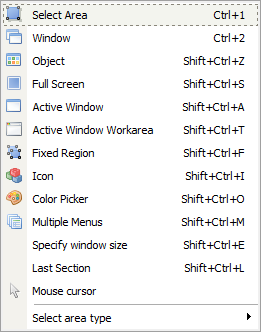
-Select Area (Shift+Ctrl+R): Lets the user manually select the area to capture.
-Window (Shift+Ctrl+W): Helps the user select by window.
-Window Scroll (Shift+Ctrl+C): Easily captures the entire scrollable screen in browsers and Microsoft Office products.
-Object (Shift+Ctrl+Z): Unlike Window Capture, this allows more detailed selection.
-Full Screen (Shift+Ctrl+S): Captures the entire screen.
-Active Window (Shift+Ctrl+A): Captures the currently active program window.
-Active Window Work Area (Shift+Ctrl+T): Captures only the content area of the active program window, with the frame removed.
-Capture Inside a Fixed Rectangle Area (Shift+Ctrl+F): Lets you select a capture area based on the fixed size set in Preferences.
-Window Icon (Shift+Ctrl+I): Lets you select a program area and automatically extracts the icon when selected.
-Color Capture (Color Picker) (Shift+Ctrl+O): This tool, commonly called a color picker, lets you extract the color at the current mouse position on the screen.
-Set Window Size (Shift+Ctrl+E): Lets you select a window, resize it, and then capture it.
-Menu (Shift+Ctrl+M): When a program menu or a shell extension menu opened by right-clicking is displayed, pressing the menu capture hotkey captures only that exact area.
-Last Capture Area (Shift+Ctrl+L): Captures the same area that was used most recently.
-Mouse Cursor Capture: Captures the current mouse cursor.