Recommended



What to Do If Minecraft Crashes as Soon as You Start Recording with oCam (NVIDIA Graphics Card)
Using oCam at work or school? A license is required, and it removes all ads, including this window. See the paid version →
In Java-based applications that use CUDA, including oCam, problems may occur when certain NVIDIA drivers are installed. In particular, if NVIDIA driver version 378.49 (or some other versions) is installed, a bug may occur where the app crashes with the error "Stack cookie instrumentation code detected a stack-based buffer overrun" when calling the CUDA initialization function `cuInit`.
This issue is not a bug in oCam itself, but a problem with the NVIDIA driver that affects all applications that use CUDA. Therefore, the same error may occur not only in oCam but also in other CUDA-based Java applications.
To resolve this issue, you need to update the NVIDIA driver to the latest version, 378.66 or later. Follow the steps below to update the driver:
1. Go to the official NVIDIA website (geforce.com/drivers).
2. Select your graphics card model and operating system, then search for the latest driver (version 378.66 or later).
3. Run the downloaded driver installer and proceed with the installation.
4. After the installation is complete, restart your computer and run oCam or another CUDA-based application to check whether the issue has been resolved.
Updating the driver to version 378.66 or later will resolve the CUDA initialization crash issue and allow you to use oCam and other related applications normally. If the problem continues even after installing the latest driver, contact NVIDIA Support or check for the latest version of oCam.
Programs
Another helpful tip
How do I record in ultra-high quality (lossless)?
Generally, recorded video is usually compressed, which can cause some color loss compared to the original screen.
If you want to record in lossless mode, you can use the Lagarith Lossless Video external codec.
You can download it from the following address.
http://lags.leetcode.net/codec.html
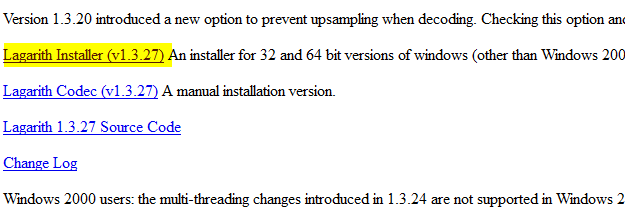
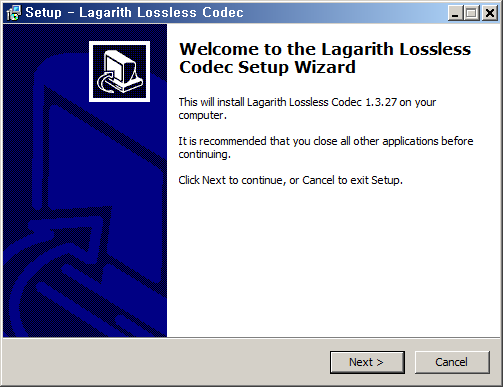
After downloading, install it as shown below.
If oCam is already running, restart it. Then in the oCam main window, click Codec - External Codec, check the Use External Codec box,
and select Lagarith Lossless Video from the list.
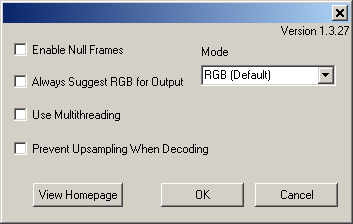
After selecting it, click Settings. The settings window opens as shown below. Usually you can leave it as is, but you can adjust it according to your environment.
Note that this codec produces visually lossless video, but the resulting files are very large and decoding takes a long time, which may cause playback stuttering.
Therefore, this codec is generally better suited for editing purposes.